
What Probate Covers in Tallahatchie County
In Mississippi, probate belongs to Chancery Court. Tallahatchie County sits in the Seventh Chancery Court District. The court's own description says it hears matters testamentary and of administration, minors' business, and matters involving persons of unsound mind. In plain terms, that covers wills, estates, guardianships, conservatorships, minor settlements, and mental-health commitments. Circuit Court does not handle these cases. A probate file may open when someone dies with a will, dies without one, or needs a court-appointed guardian or conservator. Each path begins with a petition filed with the Chancery Clerk.
The work covers far more than wills alone. Estate administration, creditor notices, inventories, and final accountings all sit in the same case file. Guardianship and conservatorship matters protect minors and adults who cannot manage their own affairs. Trust accounts and restricted funds for children also appear here. Because Tallahatchie has two judicial districts, a probate matter is filed in either Charleston or Sumner, depending on where the estate belongs.
The county's split structure shapes every probate search. Tallahatchie is not a single-courthouse county. The First Judicial District runs through Charleston, and the Second Judicial District runs through Sumner. Estate, guardianship, and conservatorship files follow that division. Knowing the district first saves a wasted trip or call. All three district chancellors, Catherine Farris-Carter, W.M. Sanders, and Willie J. Perkins, Sr., preside across the full Seventh Chancery District.
Probate Terms Defined
Probate filings use a set of legal words that show up again and again. A short glossary makes any Tallahatchie estate file easier to read. The terms below appear across wills, administrations, and guardianship cases.
- Testator
- The person who makes a will.
- Executor
- The person named in a will to carry out its terms; the court issues letters testamentary once the will is admitted.
- Intestate
- Dying without a valid will, which sends the estate into administration under state law.
- Administrator
- The person the court appoints to manage an estate when there is no valid will.
- Guardianship
- A court arrangement giving someone authority over a minor or a protected person.
- Conservatorship
- A court arrangement that manages the finances or affairs of an adult who cannot manage them alone.
How to Search Tallahatchie County Probate Records
The main online channel for probate is Mississippi Electronic Courts and Public Access to MEC, known as PAMEC. The free public Seventh Chancery District CourtInfo page confirms court names, locations, hours, and the PAMEC help contact. Full case detail and documents sit behind a PAMEC account. A separate master docket search lets the public look up hearing dates by date range, chancellor, or keyword. None of these tools certifies a record, so the clerk remains the source for official copies.
- Confirm the case is a Chancery Court probate matter, not a Circuit Court case.
- Identify the district. Charleston covers the First Judicial District; Sumner covers the Second.
- Open the Seventh Chancery MEC CourtInfo page to confirm court details, then register or sign in to PAMEC for case access.
- For hearing dates, use the master docket search and filter by date range, chancellor, or keyword.
- For certified copies, sealed files, or older paper records, contact the Chancery Clerk directly.
The Seventh Chancery Court explains its probate authority on its What is the Chancery Court page.
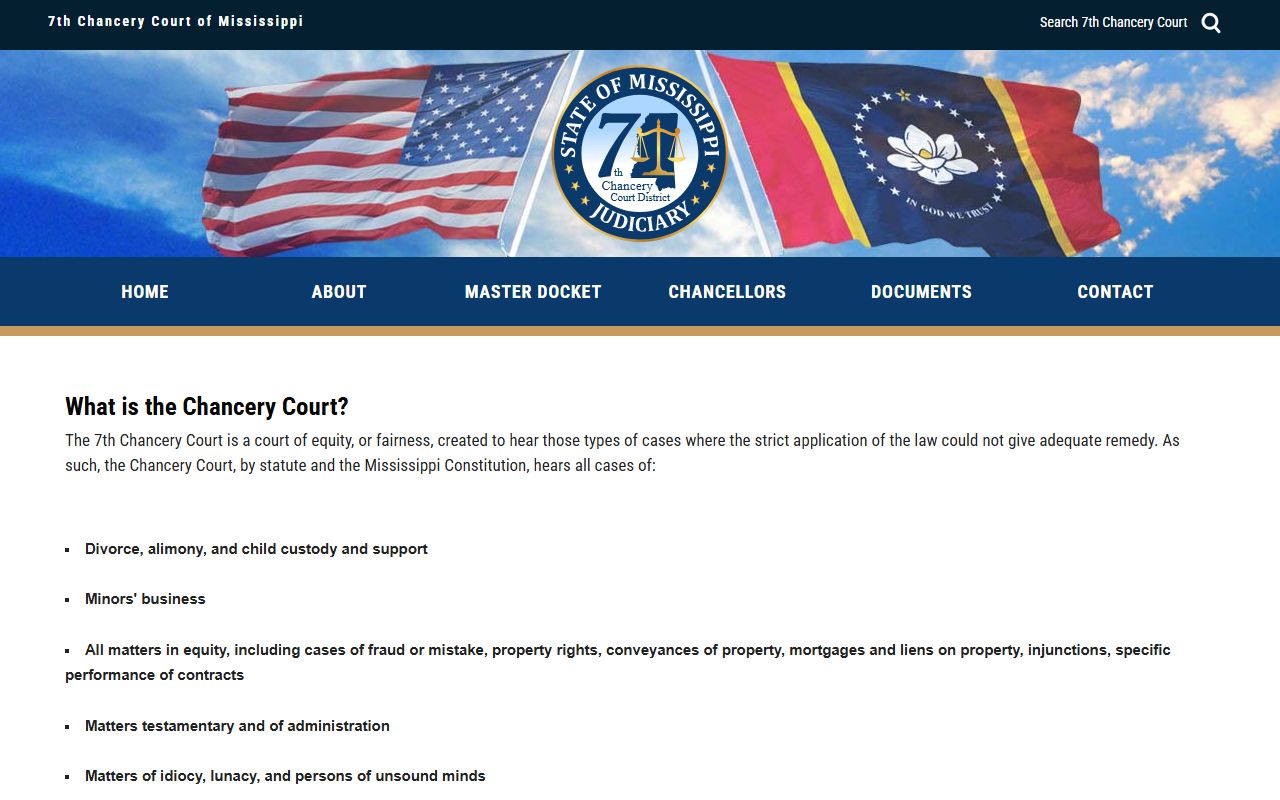
That page confirms chancery handles wills, administration, and minors' business before any probate search begins.
Online access is only one channel. A probate record can also be reached in person at the Chancery Clerk counter in Charleston or Sumner. The clerk answers by phone during posted hours. Older estate files and certified copies can be requested by mail from the office where the case was filed. A formal public-records request works as well, though it cannot reach sealed, minor, or mental-health files.
Chancery Court Locations for Probate Filings
Tallahatchie County keeps two chancery courthouses, one in each judicial district. Probate files are split between them. Chancery Clerk Anita Greenwood maintains probate, estate, and guardianship records at both seats. Office hours run 8 a.m. to 5 p.m. on weekdays. The contact details for each location appear below.
Tallahatchie Chancery Court - Charleston
1 Court Square
Charleston, MS 38921
662-647-5551
Mon-Fri 8 a.m. to 5 p.m.
Tallahatchie Chancery Court - Sumner
100 North Court Street
Sumner, MS 38957
662-375-8731
Mon-Fri 8 a.m. to 5 p.m.
The district publishes its filing and disclosure requirements on the Seventh Chancery rules of the court page.
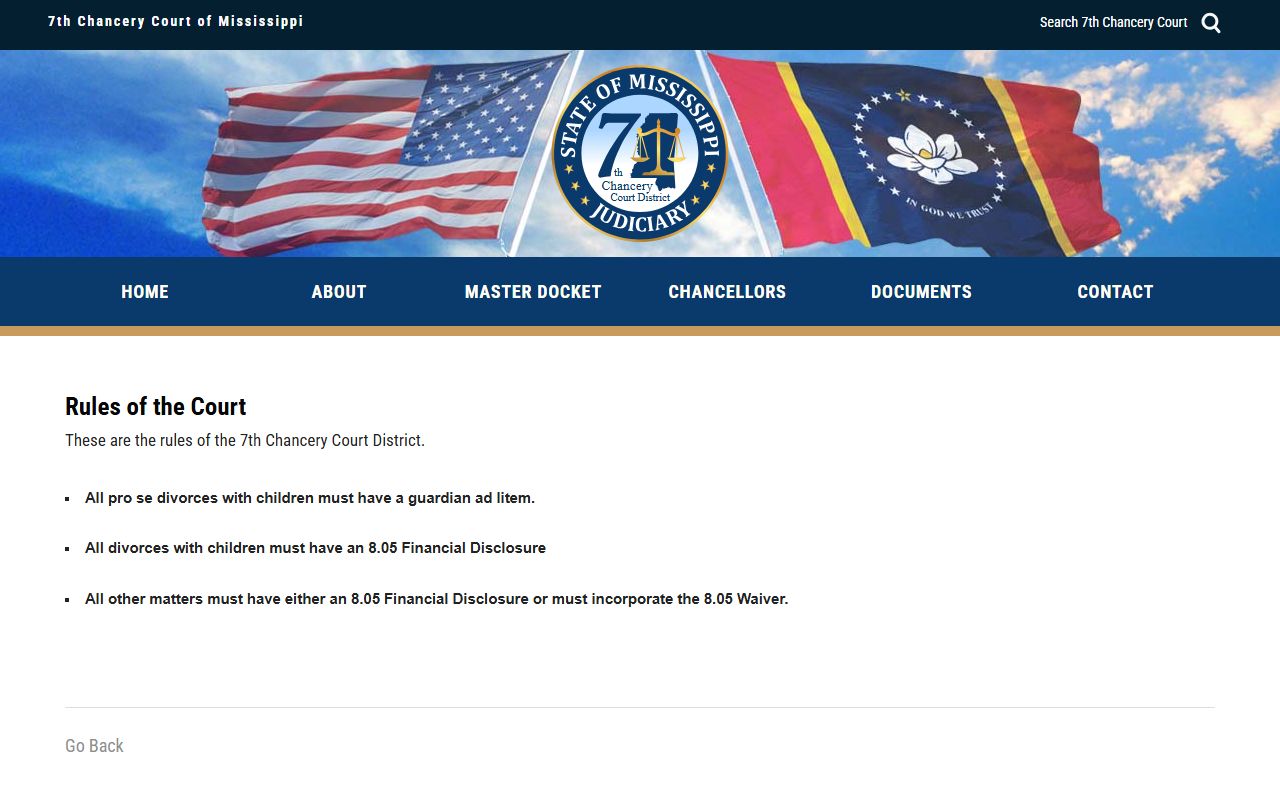
Those rules shape how estate and guardianship petitions must be prepared before filing with the Chancery Clerk.
How Probate Works in Tallahatchie County
A probate case follows a fairly set path through chancery. The exact steps depend on whether a will exists and who the interested parties are. The general flow runs like this.
- The petitioner files a probate, administration, guardianship, or conservatorship petition with the Chancery Clerk in the proper district.
- The filing identifies the deceased person, ward, or minor, plus the estate, assets, heirs or beneficiaries, and the relief requested.
- If a will exists, the petition may ask to admit the will and appoint an executor. If none exists, it may seek administration and an administrator.
- The court may require a bond, inventory, creditor notices, accountings, or waivers, depending on the estate and the parties.
- Guardianship and minor matters may involve a guardian ad litem, court approvals, trust accounts, or restricted funds.
- Final orders close the estate or guardianship once required filings, distributions, and accountings are complete.
Note: A waiver of bond, inventory, or accounting only applies when the court and the interested parties agree, so each estate can move differently.
Probate Filing Fees in Tallahatchie County
No official probate filing-fee schedule for Tallahatchie County Chancery Court was found in public sources during research. Probate costs vary with the type of petition, the size of the estate, and the copies requested. Certified copies and filing fees should be confirmed with the Tallahatchie County Chancery Clerk before filing. Figures from third-party sites should not be trusted as current.
| Item | Amount |
|---|---|
| Probate or administration petition filing | Confirm with Chancery Clerk |
| Guardianship or conservatorship petition | Confirm with Chancery Clerk |
| Letters testamentary or administration | Confirm with Chancery Clerk |
| Certified copy of a probate document | Confirm with Chancery Clerk |
| Search of older or paper estate files | Confirm with Chancery Clerk |
What Tallahatchie County Probate Records Show
A probate file gathers every paper tied to an estate or guardianship. It may hold petitions to probate wills, letters testamentary or administration, bonds, inventories, accountings, creditor notices, and heirship materials. Guardianship and conservatorship petitions and final orders sit in the same record. Read together, these documents trace who controls an estate and how it was settled.
- Case number, court, and filing date
- Parties such as the petitioner, executor, administrator, heirs, ward, or estate name
- Assigned chancellor and the running docket entries
- Documents like the will, letters, inventory, and accountings
- Status and financial entries, including trust accounts and bonds
The Mississippi Judiciary outlines statewide chancery jurisdiction on its Chancery Court page.
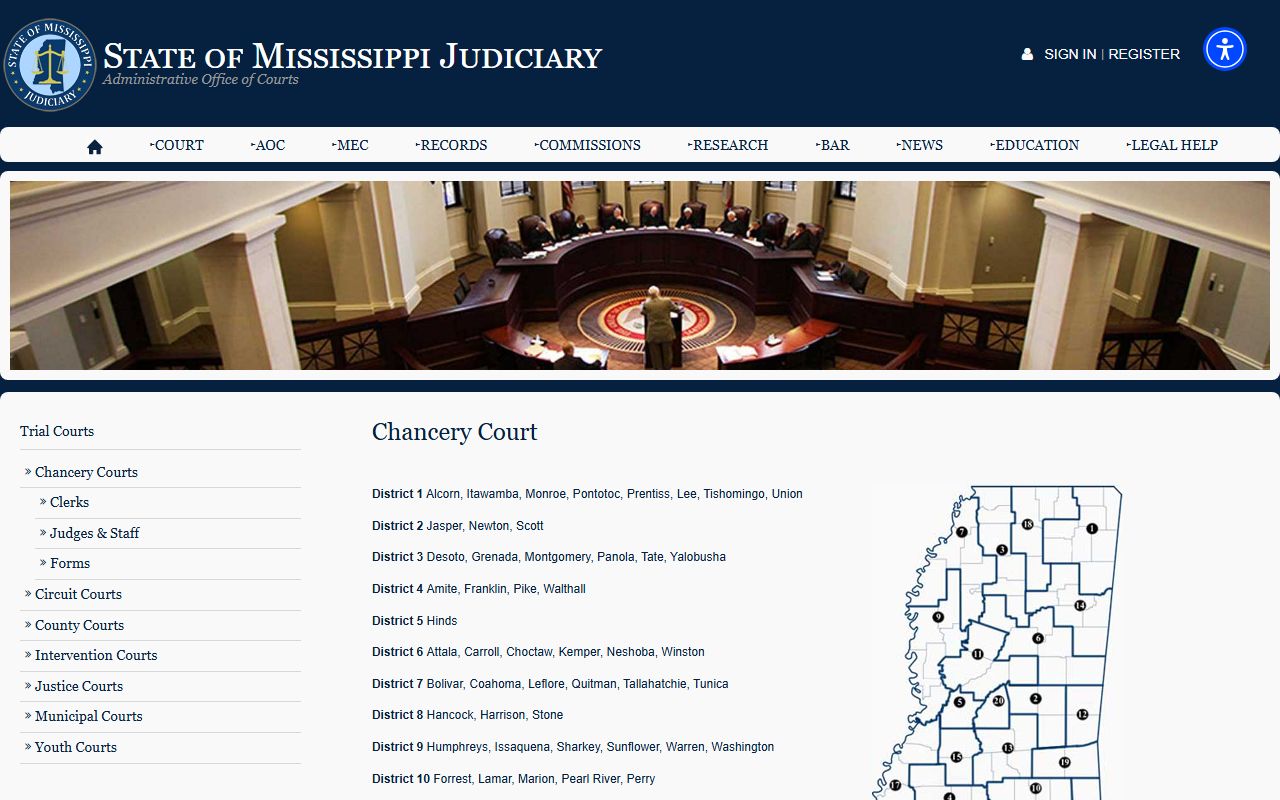
That overview confirms estates, guardianships, and conservatorships fall under the same court that handles county probate files.
Probate Case Flags in Chancery Records
Chancery MEC files use short status flags. Several relate directly to probate and guardianship work. Recognizing them helps a reader understand where a case stands and what the court has waived or required.
| Flag | Meaning |
|---|---|
| ACCOUNTING WAIVED | The accounting requirement was waived. |
| BOND WAIVED | The bond requirement was waived. |
| INVENTORY WAIVED | The inventory requirement was waived. |
| GAL | A guardian ad litem was appointed on the case. |
| GAL_1k | Guardian ad litem fees exceed $1,000. |
| TRUST | A trust account is tied to the case. |
| Minor_Child | A minor child is involved. |
| Vault_In / Vault_Out | The file moved into or out of the courthouse vault. |
| CLOSED / SEALED / STAYED | Status flags for closed, sealed, or paused matters. |
Restricted Tallahatchie County Probate Records
Not every probate paper is open to the public. Guardianship and conservatorship files often involve minors or protected adults, so parts may be sealed or redacted. Mental-health commitment records fall under chancery jurisdiction and are treated as confidential. Adoption files, which also run through chancery, are generally restricted. A sealed case may require party status, an attorney appearance, or a court order before anyone can view it.
Mississippi's Public Records Act favors open inspection. It does not override sealed orders, juvenile confidentiality, or mental-health protections. Minor names, Social Security numbers, bank accounts, and medical records are commonly redacted. When a file is restricted, the Chancery Clerk can explain what access, if any, is allowed. The same clerk also keeps divorce decrees, so a family search may touch both probate and marriage and divorce records at once.