
Marriage Licenses in Tallahatchie County
A Mississippi marriage license is issued by the circuit clerk, not the chancery court. In Tallahatchie County that office belongs to Circuit Clerk Daphane Neal, who keeps the marriage record alongside the county's circuit court files. The county has two judicial districts and two courthouses, so a couple can apply at the Charleston counter or the Sumner counter during regular hours.
Both applicants normally appear together. Each person shows proof of age and identity, answers questions required by state law, and pays the license fee before the clerk issues the document. Mississippi Code Section 93-1-5 sets the conditions a circuit clerk must confirm before issuing a license, including the age and parental-consent rules. The same office can later certify a copy of the marriage record for a name change, an immigration filing, or a benefits claim. For broader help with the office and its hours, the Tallahatchie County Circuit Clerk page covers the wider record set.
Circuit Clerk - First District
1 Court Square
Charleston, MS 38921
662-647-8758
Mon-Fri 8 a.m. to 5 p.m.
Circuit Clerk - Second District
100 N Court Street
Sumner, MS 38957
662-375-8515
Mon-Fri 8 a.m. to 5 p.m.
How to Apply for a Marriage License
Plan the visit before the wedding date. Call the Circuit Clerk first to confirm the current fee, the accepted forms of payment, and whether the office wants both applicants at the same time. A short call avoids a return trip when one document is missing.
- Call the Circuit Clerk in Charleston or Sumner to confirm the fee, hours, and what each applicant must bring.
- Gather proof of age and identity for both applicants, such as a driver license, state ID, passport, or birth certificate.
- If either applicant is under 21, bring parental or guardian consent as required by Mississippi Code Section 93-1-5.
- Both applicants appear at the courthouse counter together and complete the application.
- Provide the details the form asks for, including prior-marriage information and parents' names.
- Pay the license fee and receive the license once the clerk verifies the application.
Mississippi does not impose a statewide waiting period or a blood-test requirement for a marriage license. Because local practice can still differ, the clerk's office is the right place to confirm timing before the ceremony.
Marriage License Application Fields
The application gathers identity and history details for both applicants and feeds the statistical record that the state keeps. A Tallahatchie-specific form was not published online, so the inventory below reflects the standard Mississippi circuit clerk requirements and the conditions set by statute. Confirm the exact form with the Circuit Clerk before the visit.
| Field or Requirement | Required | Notes |
|---|---|---|
| Applicant 1 full legal name | Yes | Used for the license and the statistical record. |
| Applicant 2 full legal name | Yes | Both applicants are named on the license. |
| Proof of age and identity | Yes | Driver license, state ID, passport, or birth certificate per clerk rules. |
| Parent or guardian consent if under 21 | Conditional | Section 93-1-5 requires consent evidence for applicants under 21. |
| Prior marriage end date | Commonly required | Confirm the format with the Circuit Clerk. |
| Parents' names including maiden names | Commonly required | A standard Mississippi circuit clerk field. |
| Fee and payment | Yes | Tallahatchie amount not published; confirm locally before applying. |
How to Look Up Tallahatchie County Marriage Records
A county marriage record can be confirmed in person at the Circuit Clerk office that issued the license. The clerk holds the original record and can produce a certified copy for the people named on it or others allowed under state rules. For older records, a mailed or phoned request to the Circuit Clerk is the practical route.
The Mississippi State Department of Health also maintains a statewide marriage-record service. The Vital Records office lets the public order marriage records online or by other channels for events recorded in the state system. That channel is useful when the county of marriage is unknown or when an applicant lives out of state.
The Mississippi State Department of Health Vital Records page lists birth, death, marriage, and divorce-record services in one place.
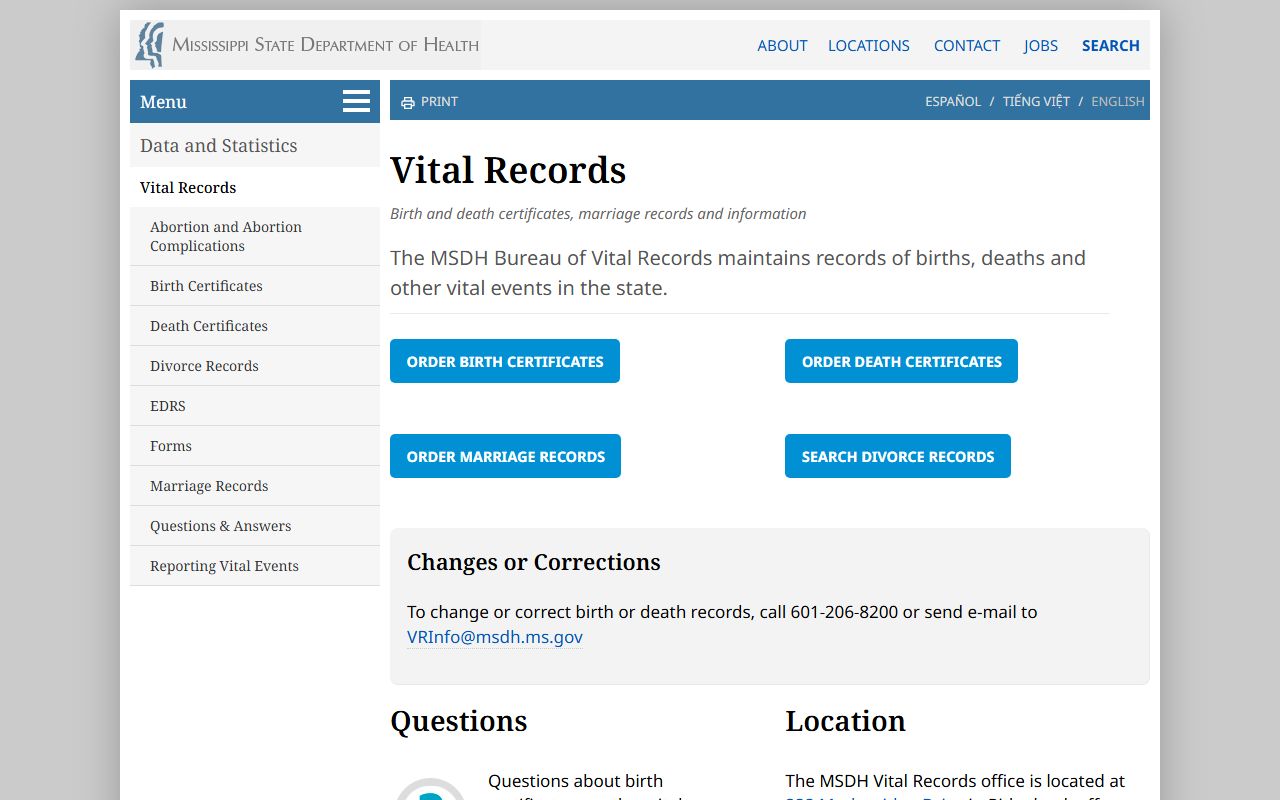
That landing page links to the order-marriage-records service and explains which events the state office can supply.
To find a record quickly, have the full names of both spouses, the approximate date of the marriage, and the county where the license was issued. The more detail the request includes, the faster the clerk or the state office can match the record.
Tallahatchie County Marriage and Divorce Fees
Fees fall into two groups: the county charges set by the clerk and the statewide search charge set by the health department. The only fee published in official statewide material is the divorce-index search. Marriage-license and certified-copy charges are set locally and were not posted for Tallahatchie County, so those are marked for local confirmation rather than guessed at.
| Item | Amount |
|---|---|
| Marriage license | Confirm current fee with the Circuit Clerk |
| Certified marriage record copy | Confirm current fee with the Circuit Clerk |
| MSDH divorce-index search (five-year search) | $17 |
| Certified divorce decree copy | Confirm current fee with the Chancery Clerk |
Note: The state divorce-index search returns a county, book, and page number, but the certified decree itself still comes from the chancery clerk in the county that granted the divorce.
How to Find Tallahatchie County Divorce Records
Divorce is a chancery court matter in Mississippi, not a circuit court matter. A Tallahatchie County divorce file is held by the Chancery Court that granted it, with locations in Charleston and Sumner. The Seventh Chancery Court District covers Tallahatchie along with Leflore, Quitman, and Tunica counties, and three chancellors preside over the district.
A divorce file can include the petition, the property and support agreements, custody and visitation orders, the final judgment, and any later modifications. Some material is restricted. Financial disclosures, minor-child details, and sensitive family exhibits may be sealed or redacted, so a public search may not show every page in the file.
The Seventh Chancery Court No-Fault Divorce page warns that many online divorce forms do not meet Mississippi legal requirements.
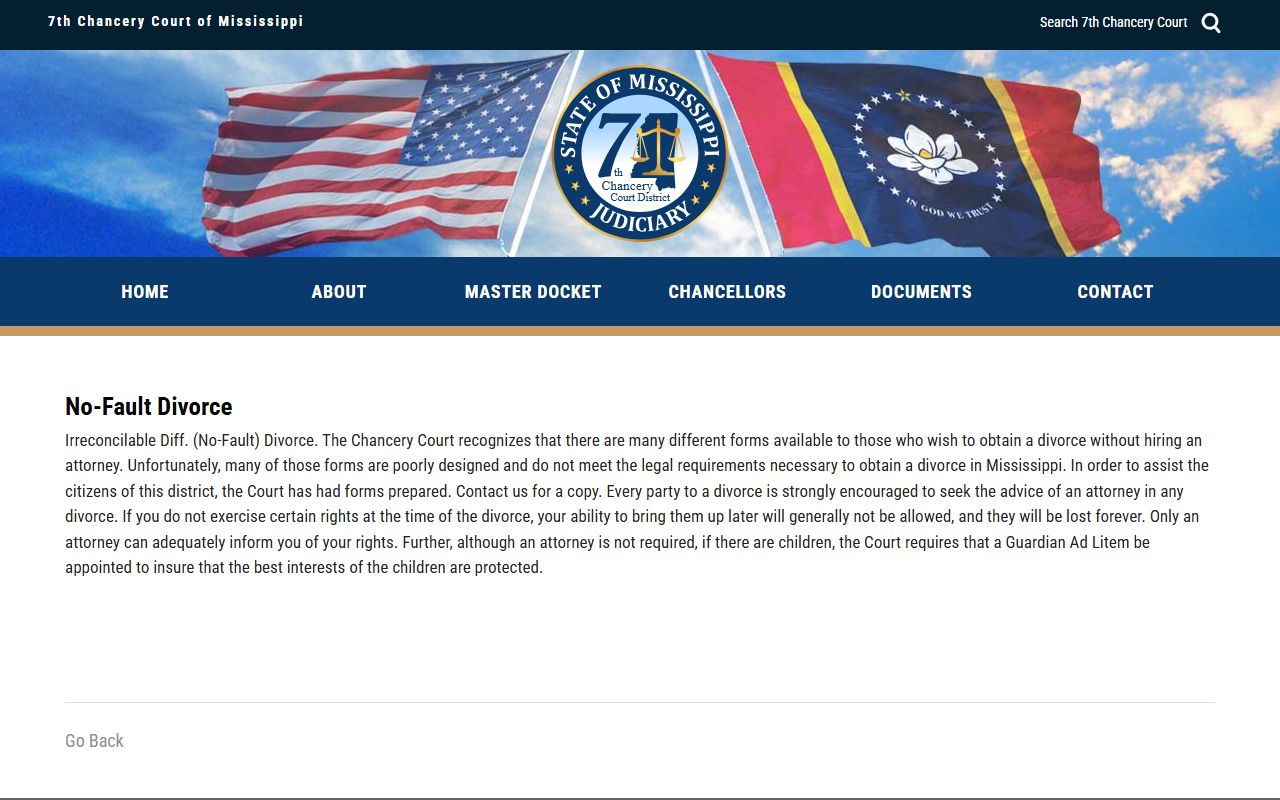
The same page urges parties to seek legal advice and states that a guardian ad litem is required when children are involved. For the office that certifies a decree, the Chancery Clerk page explains the wider chancery record set.
Filing a Divorce in Chancery Court
The chancery court process follows a set order, and the Seventh Chancery District adds local rules that pro se filers often miss. The court requires every divorce with children to include an 8.05 Financial Disclosure, and other matters must either include that disclosure or incorporate a waiver. Where children are involved, a guardian ad litem is appointed to protect their interests.
- File the divorce in Chancery Court, not Circuit Court, in the correct judicial district.
- Use the Tallahatchie Chancery Clerk office in Charleston at 662-647-5551 or Sumner at 662-375-8731.
- Include the 8.05 Financial Disclosure when children are involved, or a disclosure or waiver in other matters.
- Expect a guardian ad litem when the case involves children.
- For hearing dates, use the Seventh Chancery master docket search by date, chancellor, or keyword.
- After the judgment, request a certified copy of the decree from the Chancery Clerk.
The Seventh Chancery Court FAQ page answers common questions about contacting a chancellor and about representation.
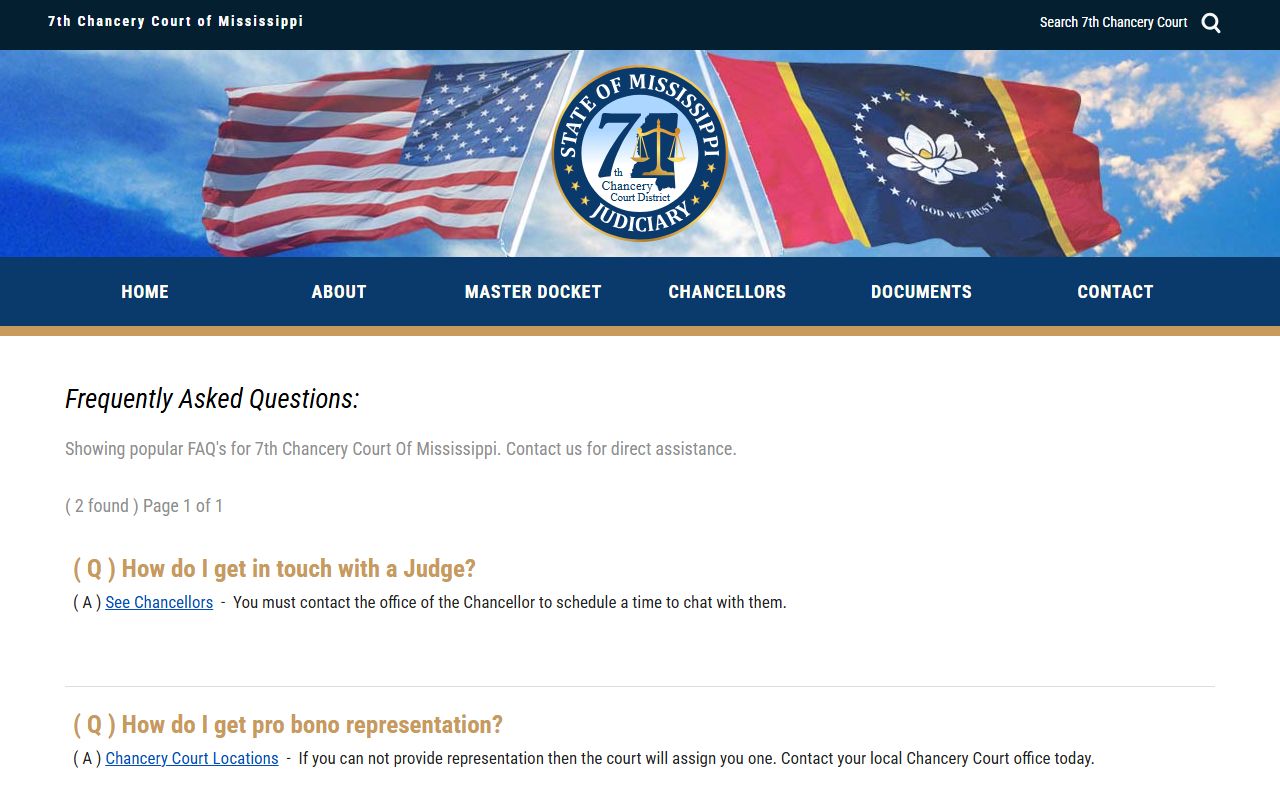
It reinforces that court staff cannot give legal advice, which is why counsel matters in a contested or child-related divorce.
Mississippi Vital Records and the Divorce Index
The Mississippi State Department of Health does not keep divorce decrees and cannot issue a certified copy of one. What it offers is a divorce-index search that points to the county where the divorce was recorded. The $17 charge covers a five-year search of the state divorce index for the period from January 1, 1926 to June 30, 1938 and from January 1, 1942 to the present.
The search returns the county, book, and page number for the record, which is enough to request the decree from the right chancery clerk. The health department also notes that, although filing is required by law, not every divorce record reached the state office. Phone ordering for vital records runs through VitalChek at 601-206-8200.
The Mississippi State Department of Health Divorce Records page explains the index search and the path to a certified decree.
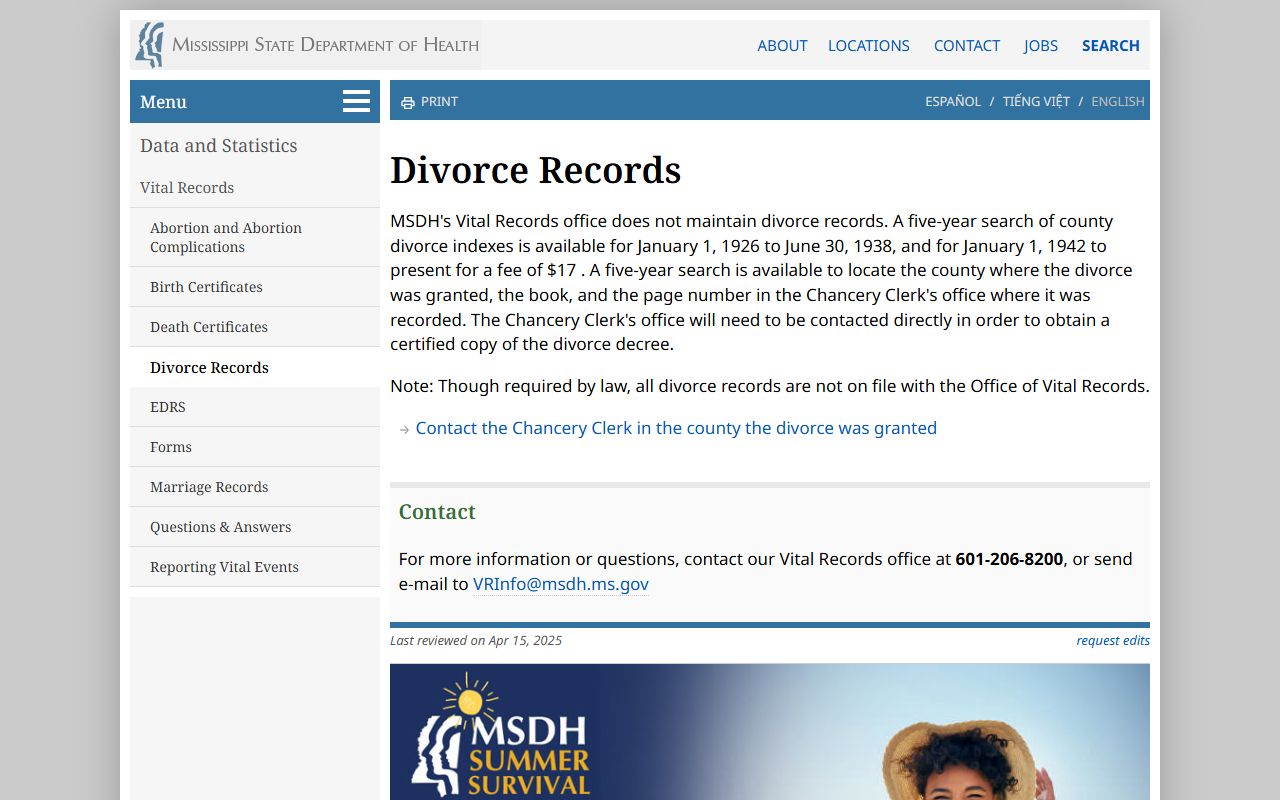
That page makes the split clear: the state finds the record, while the county chancery clerk certifies the decree.
Mississippi Vital Records
Mississippi State Department of Health
VitalChek phone ordering
601-206-8200
Getting Certified Copies
An online view or a plain printout is fine for personal reference, but legal steps usually need a certified copy. A name change, a remarriage, a passport application, or an estate matter often requires the certified document with the office seal. The certifying office depends on the record type.
Important: A certified marriage record comes from the Circuit Clerk, while a certified divorce decree comes from the Chancery Clerk in the county that granted the divorce. The state health department certifies neither divorce decree.
Vital records can also be ordered through a statewide channel. The Mississippi State Department of Health order-by-phone page routes orders through the VitalChek service.
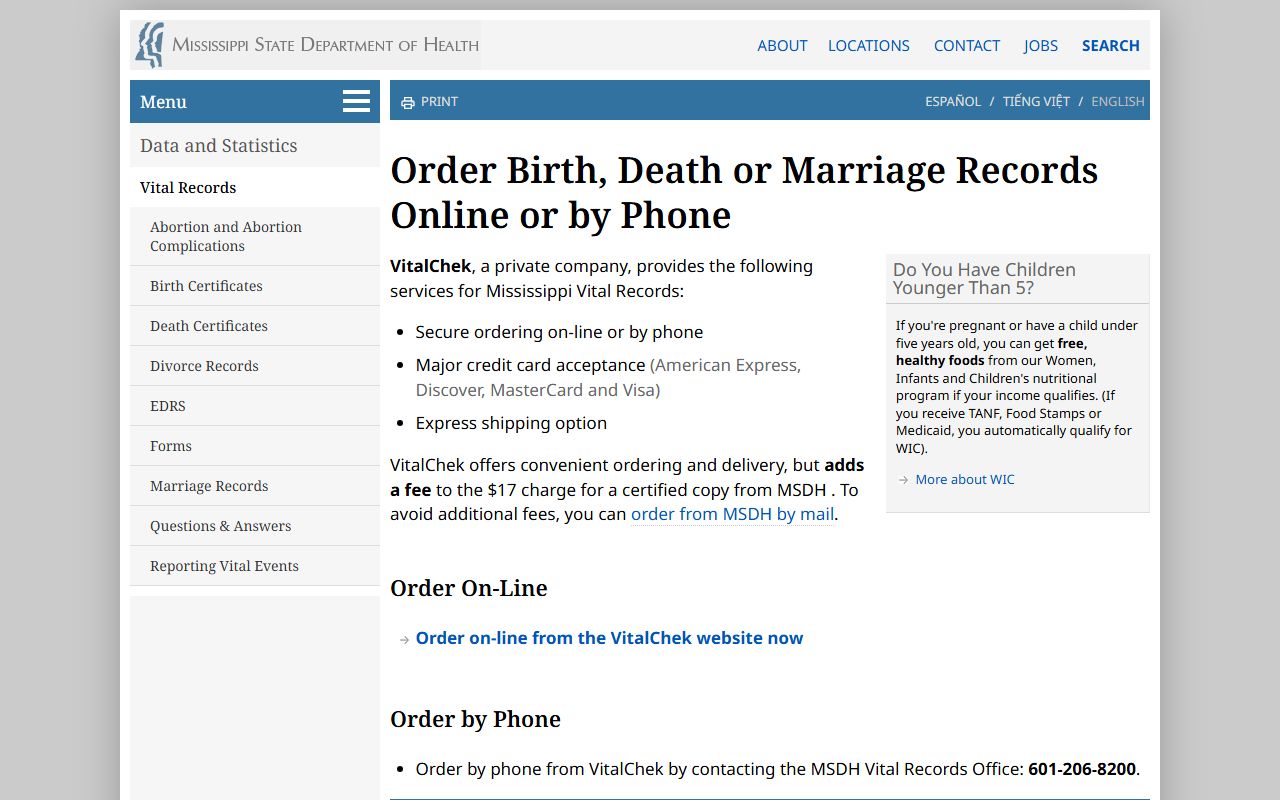
That option helps when an applicant cannot reach a county counter, though the certified decree still depends on the county chancery clerk. Note: Call the issuing office first to confirm the current copy fee, accepted payment, and what identification or eligibility proof a certified copy requires.