
Tallahatchie County Arrest Records and Court Charges
A Tallahatchie County arrest record is the record of an arrest itself. It captures the arresting agency, the date and place of the arrest, and the booking allegation an officer lists at that time. An arrest, on its own, is not a charge. After someone is arrested, the prosecutor reviews the facts and decides which formal charges to file with the court clerk. Those filed charges become the court charge record, and they drive everything that follows in the case.
The two records sit on different sides of the system. The arrest and booking side is law-enforcement custody information, and the jail roster and booking detail belong with Tallahatchie County inmate records. The court charge record is what the prosecutor actually filed. It is tracked through the case on the court docket. Court charges after arrest can change as a case moves, while the original arrest entry stays fixed. The full case file, with every motion, plea, and outcome, lives in the criminal court records.
The Mississippi Judiciary explains how the trial courts that handle these charges are organized on its trial courts overview.
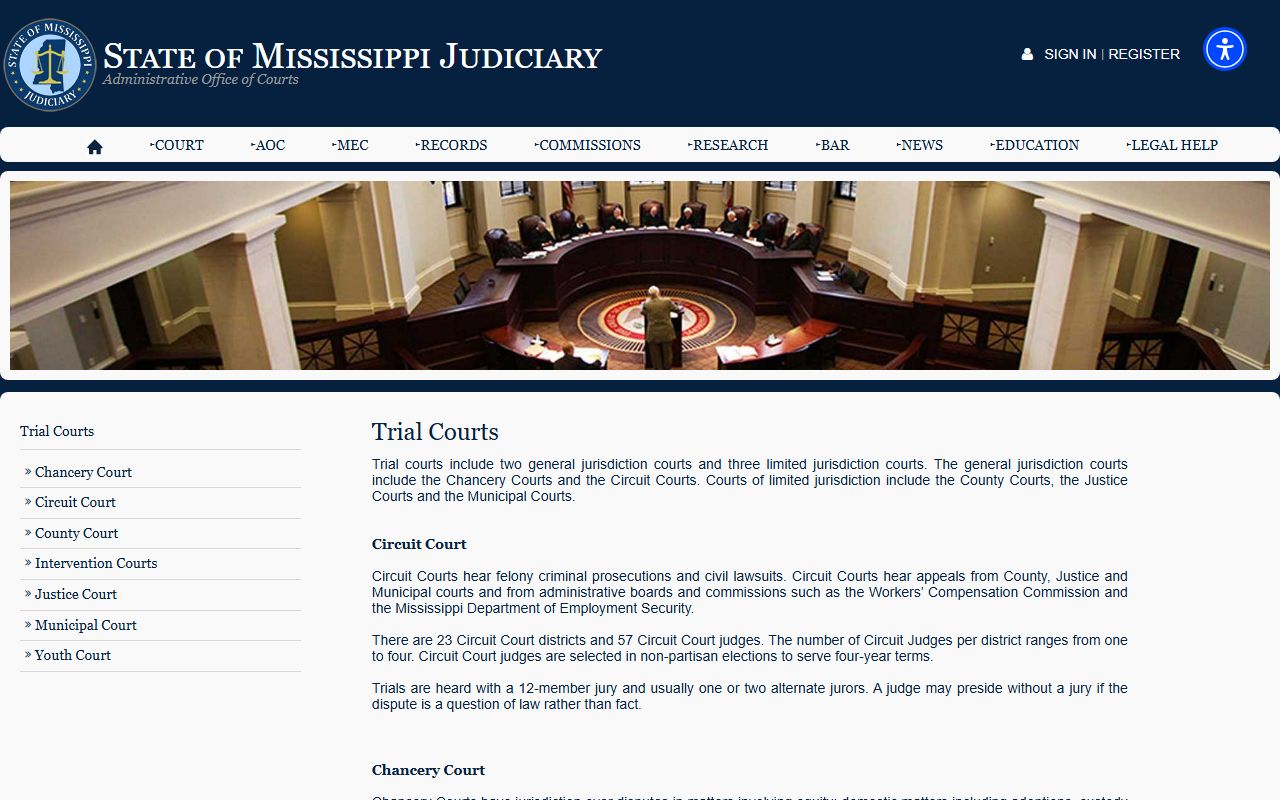
Felony charges in Tallahatchie County are prosecuted in Circuit Court, so the charge record for a serious case usually traces back to that level rather than to the booking paperwork.
How to Find Tallahatchie County Arrest Records and Charges
Charges and their status show up in the court case index, not in a public arrest blotter. For Tallahatchie County, Circuit Court and Chancery Court cases run through Mississippi Electronic Courts, with public access provided through PAMEC. The booking and custody side, including who is currently held, sits with the sheriff. That detail is covered on the inmate records page rather than in the court index. Start the charge search at the court level.
- Open the Mississippi Electronic Courts public access portal, PAMEC, for the correct court.
- Search by the defendant name or, if known, the case number.
- Open the matching case and read the list of filed charges.
- Check each charge for its statute code, severity level, and current status.
Tallahatchie County runs two courthouse districts, one in Charleston and one in Sumner, and a case is filed in the district where the matter arose. A search that comes up empty in one district may need a second check in the other. When a charge does not appear online, the search does not stop there. The Circuit Clerk takes record questions by phone and in person during posted weekday hours, and a public terminal at the courthouse can show files that are not available remotely. A written public-records request is the final channel for material that is not online but is not confidential.
Statewide tools fill the gaps. Mississippi does not offer a single free public rap-sheet search for general use. The Department of Public Safety does run the sex offender registry, and the Department of Corrections lists sentenced inmates and parolees. Older or non-digitized charge records may require a call or a visit to the Circuit Clerk, who certifies the official file.
How Charges Get Filed After an Arrest
The charge record begins with a charging document. At booking an officer records an arrest allegation, but the formal charge starts when a prosecutor or a grand jury files the paper that opens the case. Mississippi uses three main charging documents. A complaint or affidavit is common for misdemeanors and early proceedings. An information is filed directly by the prosecutor. An indictment is returned by a grand jury and is the route for serious felonies in Circuit Court. The booking charge, a Justice Court initial charge, and a later Circuit Court indictment can all read differently for the same arrest.
A grand jury reviews the prosecutor's evidence in private and decides whether probable cause supports a felony charge. If it does, the jury returns an indictment, often called a true bill, and the case is set in Circuit Court. If it declines, the felony charge does not move forward at that level. Misdemeanors usually never reach a grand jury and instead proceed on a complaint or an information in the lower courts.
| Complaint | Information | Indictment | |
|---|---|---|---|
| Filed By | Officer / Prosecutor | Prosecutor | Grand Jury |
| Common For | Misdemeanors | Many felonies | Serious felonies |
| Starts | The case | The case | The case |
Note: The District Attorney for the Seventeenth Circuit Court District files felony charges in Circuit Court, and those charges may differ from the original booking allegation.
Charge Status and What It Means
Charges are not fixed once filed. As a case moves, a charge can be amended, reduced, added, dropped, or dismissed, and the docket shows the current state of each count. One arrest may produce several charges that end in different ways. The terms below appear often in Mississippi court records and on the case flags used by the courts.
| Status | What It Means |
|---|---|
| Filed | The charge has been formally entered and the case is active. |
| Amended | The charge wording or count was changed by the prosecutor or the court. |
| Reduced | The charge was lowered to a less serious offense, often through a plea. |
| Dismissed | The charge was dropped by the court and is no longer being prosecuted. |
| Nolle Prosequi | The prosecutor formally chose not to pursue the charge. |
| Disposed | The charge reached an outcome such as a plea, a verdict, or a dismissal. |
Charge vs. Conviction
Being charged is not the same as being convicted. A charge is an accusation that a prosecutor must still prove, and many charges are reduced, dismissed, or end in acquittal. A conviction is the final result after a guilty plea or a verdict. An open charge is unproven and should be read that way. The comparison below shows where the two stand in the process.
| Charge | Conviction | |
|---|---|---|
| Stage | Accusation | Verdict or plea |
| Burden of Proof | Probable cause | Beyond reasonable doubt |
| Public Record | Yes | Yes |
Sealed vs. Expunged Records
Some charge records are removed from ordinary public view. A sealed record is hidden from the public but may still exist for limited official use. An expunged record is treated as though it never happened. In Mississippi, Section 99-19-71 lets eligible arrests that did not lead to conviction, along with certain misdemeanors and a limited set of felonies, be expunged. Waiting periods, prior convictions, and the specific offense all affect eligibility, so the court that handled the charge decides each request.
| Sealed | Expunged | |
|---|---|---|
| Visibility | Hidden from public | Destroyed / treated as never existed |
| Law Enforcement | Limited access | Very limited |
| Eligibility | Set by court order or rule | Section 99-19-71 sets who qualifies |
Charge Codes and Severity Levels
Each charge points to a specific Mississippi statute, and that citation defines what the State must prove and the possible penalty. Charges fall into broad severity levels. Felonies are the most serious and are prosecuted in Circuit Court. Misdemeanors are lesser offenses handled mostly in Justice Court or Municipal Court. Lower-level infractions, such as many traffic matters, sit at the bottom. A single arrest can produce several separate charges. Each one carries its own code, level, and status, so a case may show one count dismissed while another count moves forward to trial or plea.
Charge codes matter because the same conduct can be charged at different levels depending on the facts. Prior convictions, the value of property taken, the presence of a weapon, or the identity of the victim can raise a charge from a misdemeanor to a felony. The court record shows the exact statute charged. That citation is the most reliable way to judge how serious a count really is, more so than the plain-language label alone.
Statewide Charge and Criminal History Lookups
County court records show charges filed in Tallahatchie County, but some lookups reach across the state. Mississippi does not publish a free public criminal-history database for general use, and a full background check runs through fingerprint-based channels. Two statewide tools are open to the public. The Department of Public Safety operates the sex offender registry, and the Department of Corrections lists sentenced state inmates and parolees by name or ID.
The Department of Public Safety summarizes who must register and how the list works on its sex offender registration law page.
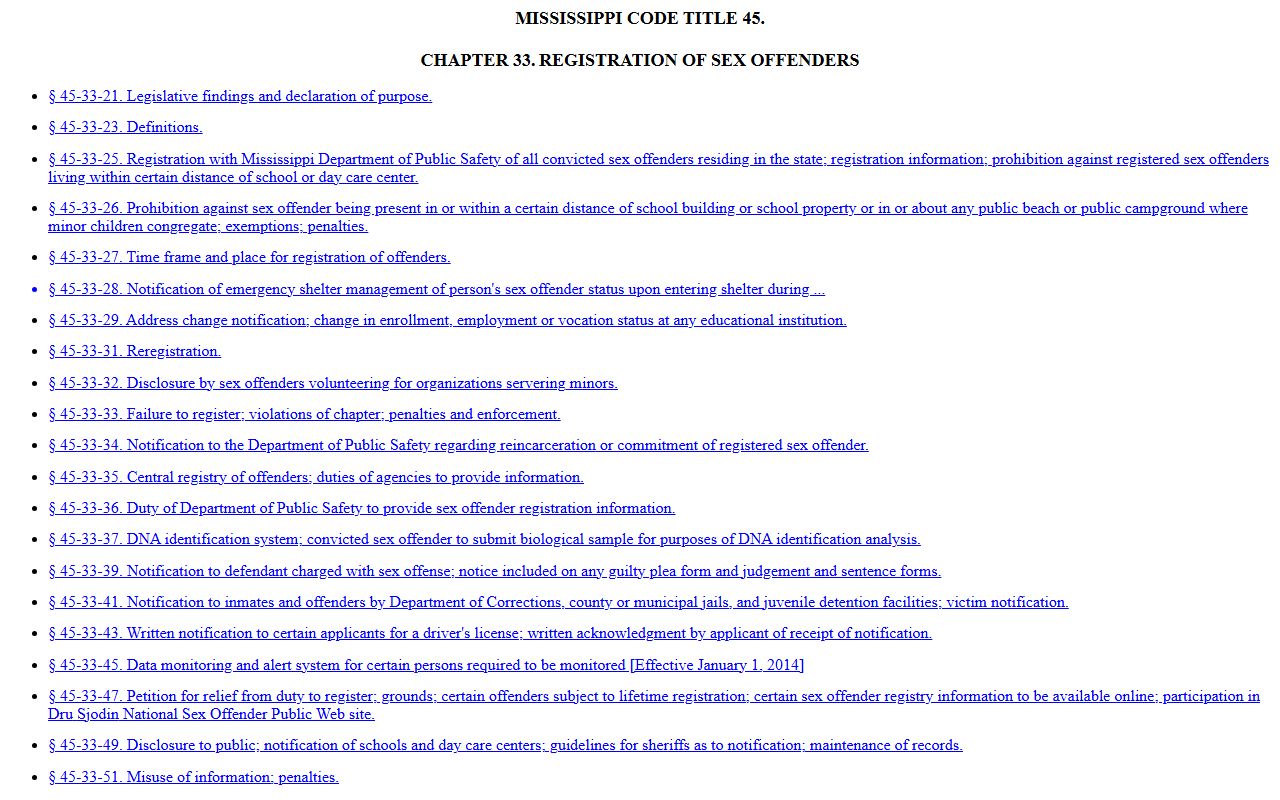
Registry status reflects a conviction outcome, not a pending charge, so it should be read alongside the court charge record rather than in place of it.
A formal Mississippi criminal-history check, the kind required for many jobs and professional licenses, is fingerprint-based and runs through authorized state channels rather than a casual name search. The Department of Corrections search accepts a first name, a last name, or an MDOC ID number, and it covers people sentenced to state custody or supervision. It does not list pretrial detainees held in a county jail, which is why county charge records and statewide tools answer different questions.
Background Check Considerations
There is a real difference between a casual record lookup and a formal background check. Employers, landlords, and licensing bodies that screen people for hiring, housing, or credit must follow the federal Fair Credit Reporting Act and use a qualified consumer reporting agency. A name search of court charges is useful for general information. It is not an FCRA-compliant report, and it can miss sealed, expunged, or out-of-county matters that a regulated screening would have to handle correctly.
Important: This site is not a consumer reporting agency under the Fair Credit Reporting Act, and its information may not be used for employment, housing, credit, or other FCRA-regulated decisions.
Restricted Charge Records in Tallahatchie County
Not every charge record is open. Juvenile charges are confidential and are not treated as ordinary public files. Sealed cases require party status, an attorney of record, or a court order before they can be viewed. Expunged charges should not appear in routine public searches at all. Charges tied to an active investigation may be withheld, and personal identifiers are often redacted. When a record cannot be found online, the Circuit Clerk can confirm whether it is restricted, sealed, or simply not yet digitized.
Anyone seeking to clear a record starts in the court that handled the arrest, charge, or conviction and files under Section 99-19-71. The petition should identify the arrest date, the charge, the arresting agency, the case number, and the disposition. If the court grants the order, it is sent to the agencies that hold the record so the entry is removed from ordinary public view. Disqualifying offenses, prior convictions, and waiting periods all affect whether the request can succeed.
Note: A dismissed or expunged charge can linger on third-party websites, so the official court index and the Circuit Clerk remain the most reliable sources.