
How to Search Tallahatchie County Court Records
The main online channel for Circuit and Chancery cases is Mississippi Electronic Courts and its public access service, known as PAMEC. The court-information pages for the Seventeenth Circuit Court District and the Seventh Chancery Court District list the Charleston and Sumner court locations, the posted hours, and the helpdesk contact. Those free pages confirm the court name before a search begins.
Two facts matter before any lookup. First, decide which court holds the case. Second, decide which judicial district, Charleston or Sumner, handled the filing. Getting both right avoids dead ends.
- Identify the case type. Felony criminal cases, major civil suits, and appeals from lower courts belong to Circuit Court, while divorce, custody, probate, guardianship, and land matters belong to Chancery Court.
- Identify the judicial district. A First Judicial District filing starts in Charleston, and a Second Judicial District filing starts in Sumner.
- Open the matching Mississippi Electronic Courts page to confirm the court, location, and hours, then use PAMEC registration for remote case detail where public access is allowed.
- For Chancery hearing dates, run the Seventh Chancery master docket search by date range, chancellor, or keyword.
- For certified copies, older paper files, or sealed matters, contact the clerk directly, because remote viewing is not the same as certification.
The Tallahatchie County Judicial System
Mississippi builds its courts in tiers. The Mississippi Supreme Court sits at the top as the court of last resort. The Mississippi Court of Appeals is the intermediate appellate court and hears cases the Supreme Court assigns to it. At the trial level, Circuit Court is the general court for felonies, large civil suits, and appeals from lower courts, while Chancery Court is the equity court for divorce, estates, guardianship, and land disputes. Justice Court and Municipal Court handle the day-to-day local caseload.
The Mississippi Judiciary overview of the state court system explains how these levels connect from the trial bench up through appeal.
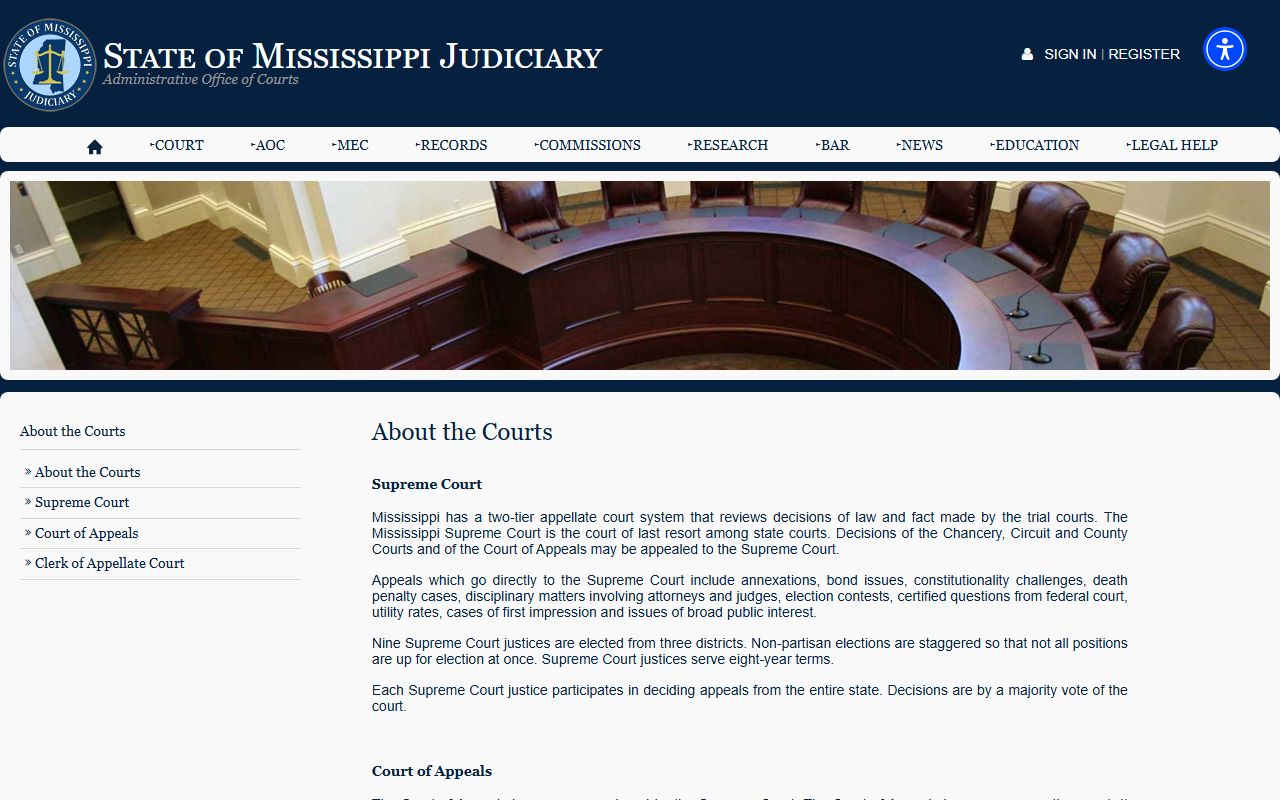
That page sets the framework Tallahatchie County court records move through, from first filing to final appeal. One local point matters: Tallahatchie County has no County Court, so cases route through Circuit, Chancery, Justice, and Municipal courts instead.
Case flow: Justice Court or Municipal Court › Circuit Court › Mississippi Court of Appeals › Mississippi Supreme Court. Tallahatchie County has no County Court level in that chain.
Tallahatchie County's Two Courthouses
Tallahatchie County is a dual county seat county. The Tallahatchie River splits it, and the county has long run two judicial districts. The First Judicial District is centered in Charleston, and the Second Judicial District is centered in Sumner. Each seat hosts Circuit Court and Chancery Court functions, so the file you want may sit at either courthouse. The county directory page also lists the elected officials who run those offices.
The Mississippi Association of Supervisors page for Tallahatchie County lists the county seats, the board address, and the clerks who maintain court records.
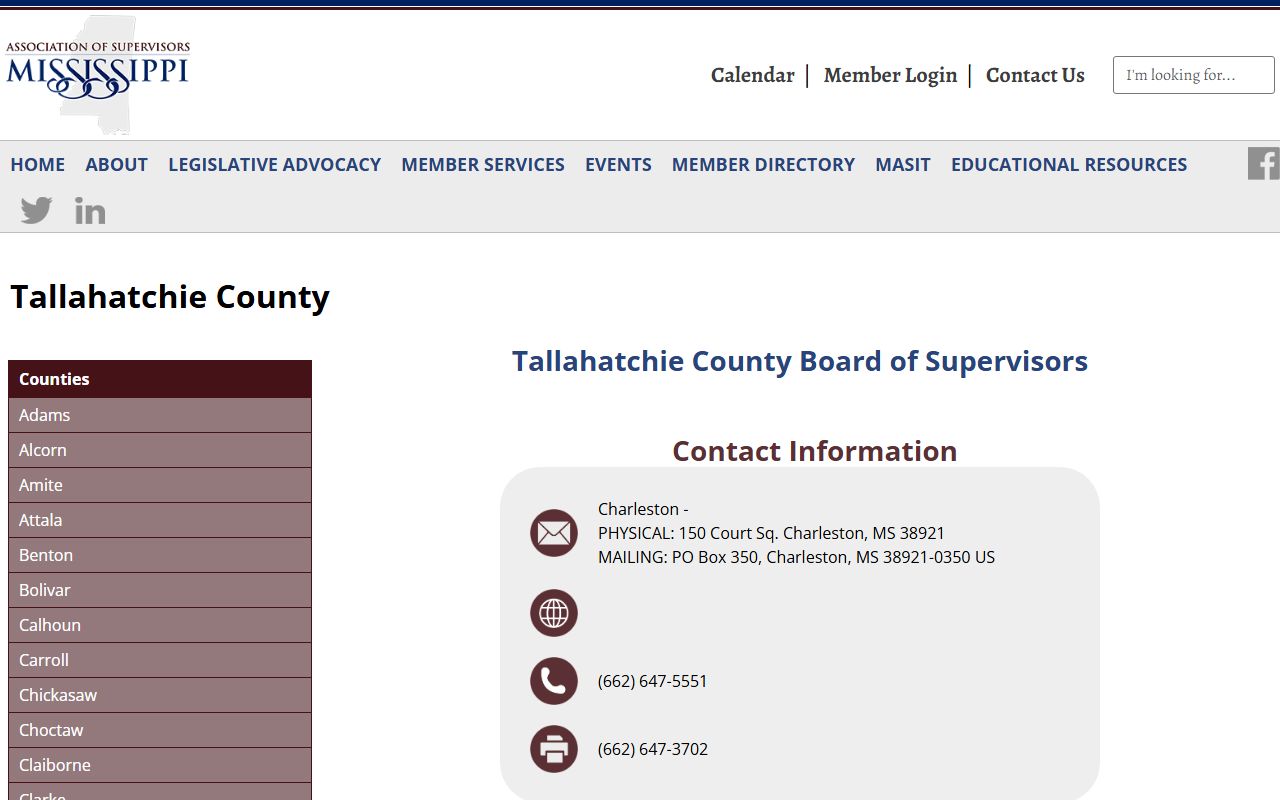
That directory confirms Daphane Neal as Circuit Clerk and Anita Greenwood as Chancery Clerk, the two offices that hold most local court records. The cards below show where each court sits during weekday hours of 8 a.m. to 5 p.m.
Circuit, Chancery, Justice, and Municipal Courts Compared
Mississippi does not use a county "district court" as its trial court, so it helps to learn the four working courts. Circuit Court tries felonies and major civil cases. Chancery Court handles equity, divorce, and probate. Justice Court takes small claims, evictions, county misdemeanors, and tickets written outside a city. Municipal Court handles city ordinance cases and tickets written by city police.
City tickets and city ordinance cases run through the Charleston Municipal Court, reached through City Hall. The Mississippi Municipal League page for the City of Charleston lists the city hall address and phone used for those matters.
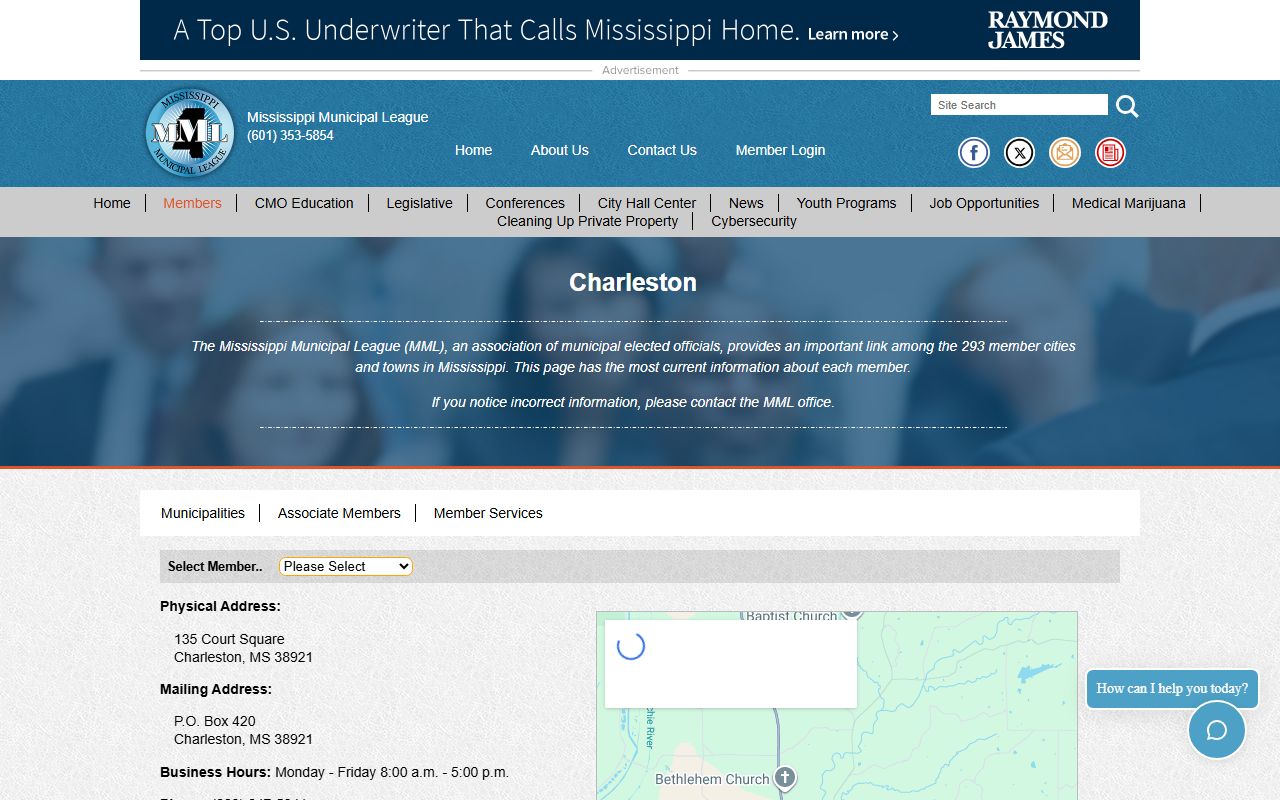
That page confirms Charleston City Hall at 135 Court Square, the contact point for city traffic and ordinance records. The table sorts the four courts by the records each one keeps.
| Court | Primary Cases | Where Records Sit |
|---|---|---|
| Circuit Court | Felonies, major civil suits, appeals from lower courts | Circuit Clerk, Charleston and Sumner |
| Chancery Court | Divorce, custody, probate, guardianship, land, mental health | Chancery Clerk, Charleston and Sumner |
| Justice Court | Small claims, evictions, county misdemeanors, county and patrol tickets | Justice Court, county |
| Municipal Court | City ordinances, city misdemeanors, city police tickets | City hall or town hall |
Types of Court Records Available in Tallahatchie County
The records you can pull depend on the court that produced them. Circuit Court generates criminal and civil files. Chancery Court generates family, probate, and land files. Justice and Municipal courts generate the high-volume traffic and misdemeanor record set. Small towns produce municipal records too, even where the population is modest.
The Town of Webb is one example of a small municipal venue that can hold city ticket records. The Mississippi Municipal League page for the Town of Webb lists the town hall address and phone for those matters.
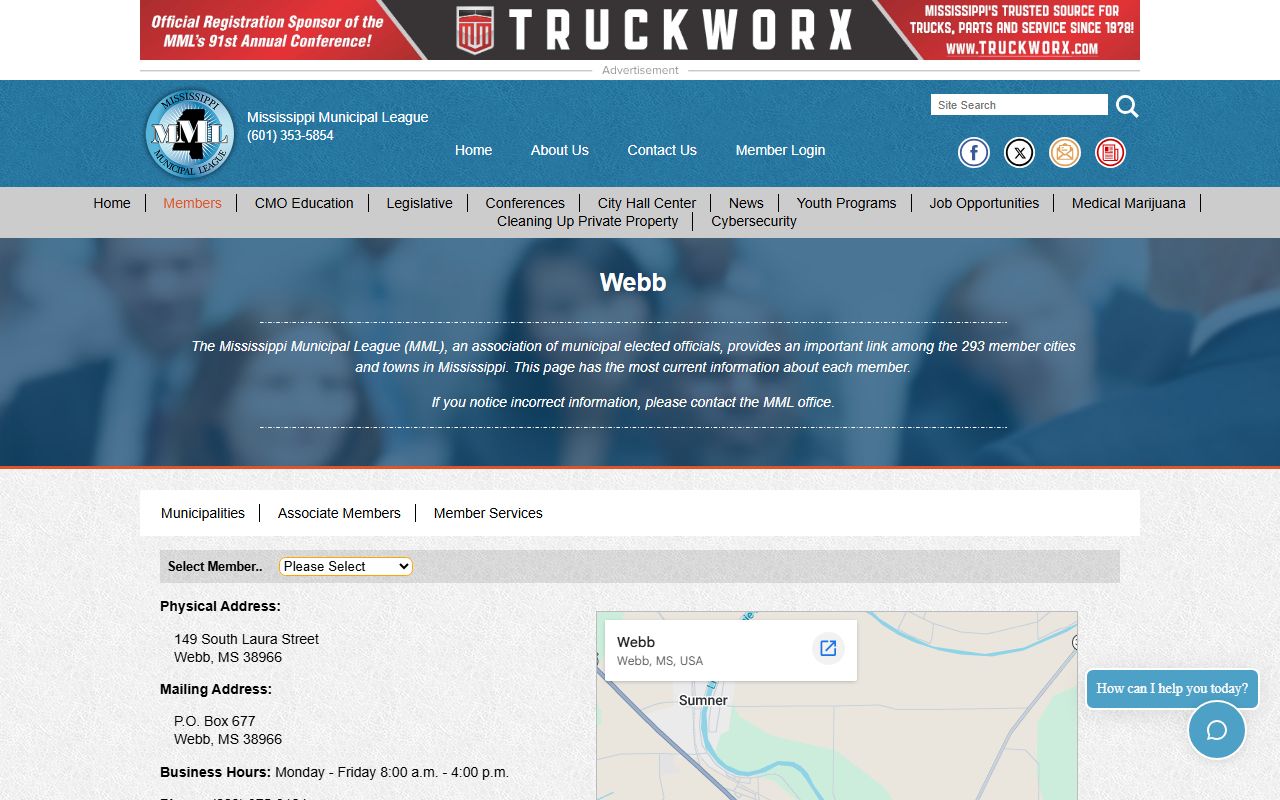
That page shows Webb Town Hall on South Laura Street, a contact for city traffic and ordinance records. The categories below cover the records most people search for.
- Criminal records stem from Circuit Court felony files and from misdemeanor cases in the lower courts.
- Civil records include complaints, answers, motions, judgments, and appeals in Circuit Court.
- Family and divorce records live in Chancery Court, covering divorce, custody, alimony, and support.
- Probate records cover wills, estates, guardianships, and conservatorships in Chancery Court.
- Traffic records sit in Justice Court for county and patrol tickets and in Municipal Court for city tickets.
What Tallahatchie County Court Records Show
A court record built in Mississippi Electronic Courts centers on the case number, the parties, the docket entries, and the status flags. The public court-information pages do not open a full sample case without a PAMEC account, but the official flag list gives a reliable vocabulary for what a file may carry. Fields vary by court and by access method.
The table sums up the fields a Tallahatchie case usually shows. Some documents and certified copies still come only from the clerk.
| Field | What It Shows |
|---|---|
| Case Number | The number the court assigns when a case opens. |
| Court and District | Seventeenth Circuit or Seventh Chancery, with the Charleston or Sumner location. |
| Filing Date | The date the first pleading, indictment, petition, or appeal was entered. |
| Parties | Plaintiff and defendant, the State and a defendant, or petitioner and respondent. |
| Docket Entries | Motions, orders, hearings, pleas, sentencing, and warrant activity in order. |
| Status and Flags | Terms such as Closed, Sealed, Expunged, Trial Pending, or Plea Pending. |
| Documents | PDF access tied to account permissions and fees; certified copies come from the clerk. |
Public Access Laws for Tallahatchie County Court Records
Mississippi opens most public records to inspection, but court access works best through the clerk who holds the file and through Mississippi Electronic Courts where the case is digital. Public access does not put every document online, and it does not override sealed orders, expungements, juvenile confidentiality, or redaction rules. The clerk is the certification source, so treat remote viewing as informational until a certified copy is issued.
Key Statutes:
Mississippi Code § 25-61-1 sets the policy that public records stay open to inspection unless a law says otherwise.
Mississippi Code § 25-61-5 lets a person request records from a public body and requires any denial to name the exemption used.
Mississippi Code § 9-1-38 exempts certain judge and aide work-product records from the Public Records Act.
Mississippi Code § 9-7-81 gives Circuit Court broad jurisdiction over felonies and civil matters not assigned elsewhere.
Mississippi Code § 99-19-71 allows eligible arrests, misdemeanors, and limited felony convictions to be expunged under set conditions.
Records That Are Restricted or Confidential
Some files never appear in an ordinary public search. Juvenile records are not treated as open public files. Sealed records may require party status, an attorney appearance, or a court order. Expunged records are removed from ordinary public view. Adoption files and mental-health proceedings are sensitive and generally restricted. Minor names, Social Security numbers, bank details, and family financial exhibits are often redacted.
An expunction in Tallahatchie County starts in the court that handled the arrest, charge, or conviction. Section 99-19-71 is the key statute. The petitioner identifies the arrest date, charge, agency, case number, and disposition, then shows why the statute allows relief. If granted, the order goes to agencies that hold the record. Disqualifying offenses, waiting periods, and prior convictions all matter, so the court of conviction is the right place to confirm eligibility.
Note: An expunged or sealed Tallahatchie County record should not be expected to surface in a routine public search, even when related case numbers remain visible.
Searching the Seventh Chancery Master Docket
Chancery hearing dates in Tallahatchie County run through the Seventh Chancery Court master docket. It is not a full case-search portal, but it shows the official scheduling interface and lets a user filter by date range, by chancellor, or by keyword. The chancellor list covers Catherine Farris-Carter, W.M. Sanders, and Willie J. Perkins, Sr.
The Seventh Chancery master docket search uses the fields below. Hearing dates can change, so confirm settings with the court before travel.
| Field Label | Type | Notes |
|---|---|---|
| Beginning Date Range | date | Start date for the docket search. |
| Ending Date Range | date | End date for the docket search. |
| Select Chancellor | dropdown | All Chancellors, Catherine Farris-Carter, W.M. Sanders, Willie J. Perkins Sr., or Visiting Judge. |
| Search Master Docket | button | Runs the date and chancellor search. |
| Keyword Search | text | Alternative search by keyword. |
| Search by Keyword | button | Runs the keyword search. |
Tallahatchie County Sheriff and Jail Records
Jimmy Fly is the Sheriff of Tallahatchie County. No official county online jail roster was located, so custody questions start with a phone call. The sheriff mailing point is P.O. Box 100 in Charleston, and the office line is 662-647-3700. For time-sensitive custody confirmation, call the sheriff or jail rather than trusting a third-party site.
The Mississippi Sheriffs' Association directory lists the Tallahatchie County sheriff contact details.
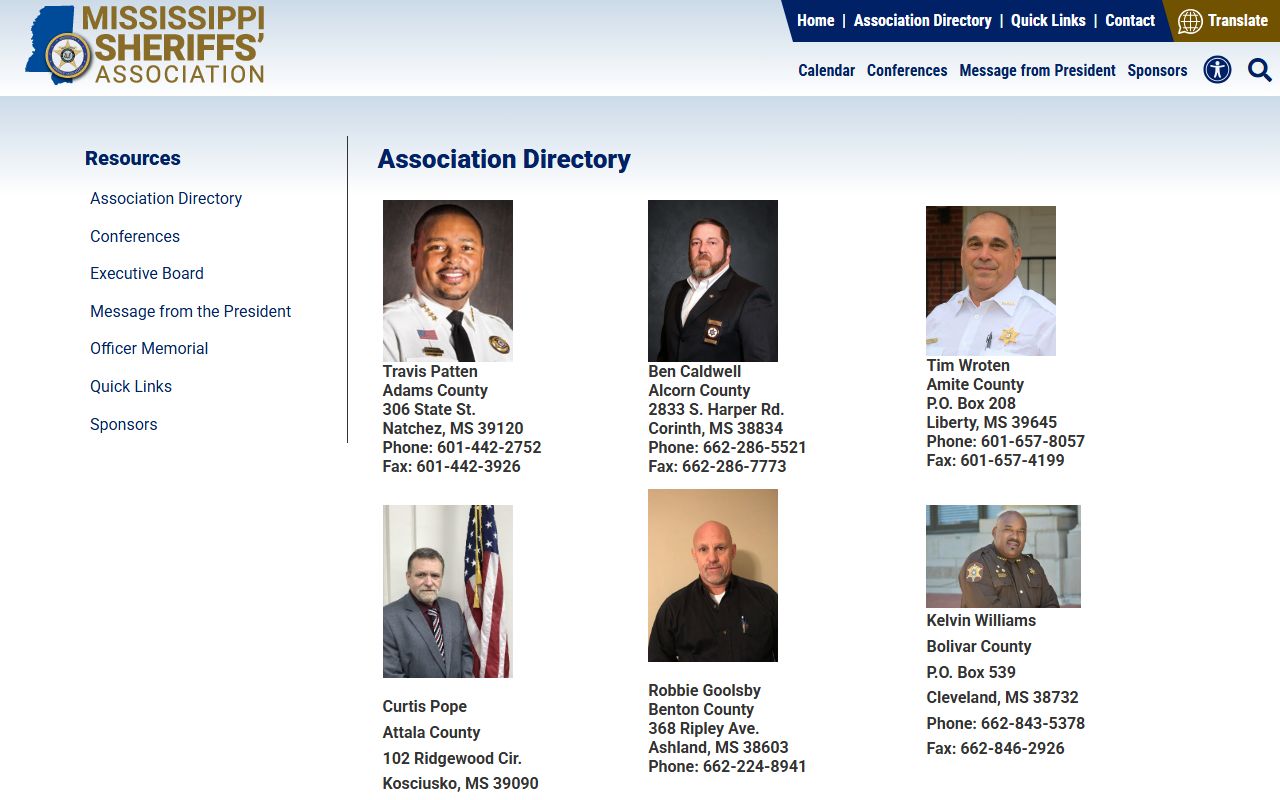
That entry gives the phone and fax numbers used to confirm a county booking. For people serving a state sentence, the search moves to the Mississippi Department of Corrections, which offers an inmate and parolee lookup by name or MDOC ID number.
A separate facility adds to the confusion. The Tallahatchie County Correctional Facility in Tutwiler is a private medium-security prison, not the county jail. The CoreCivic page for the Tallahatchie County Correctional Facility lists its address and customer agencies.
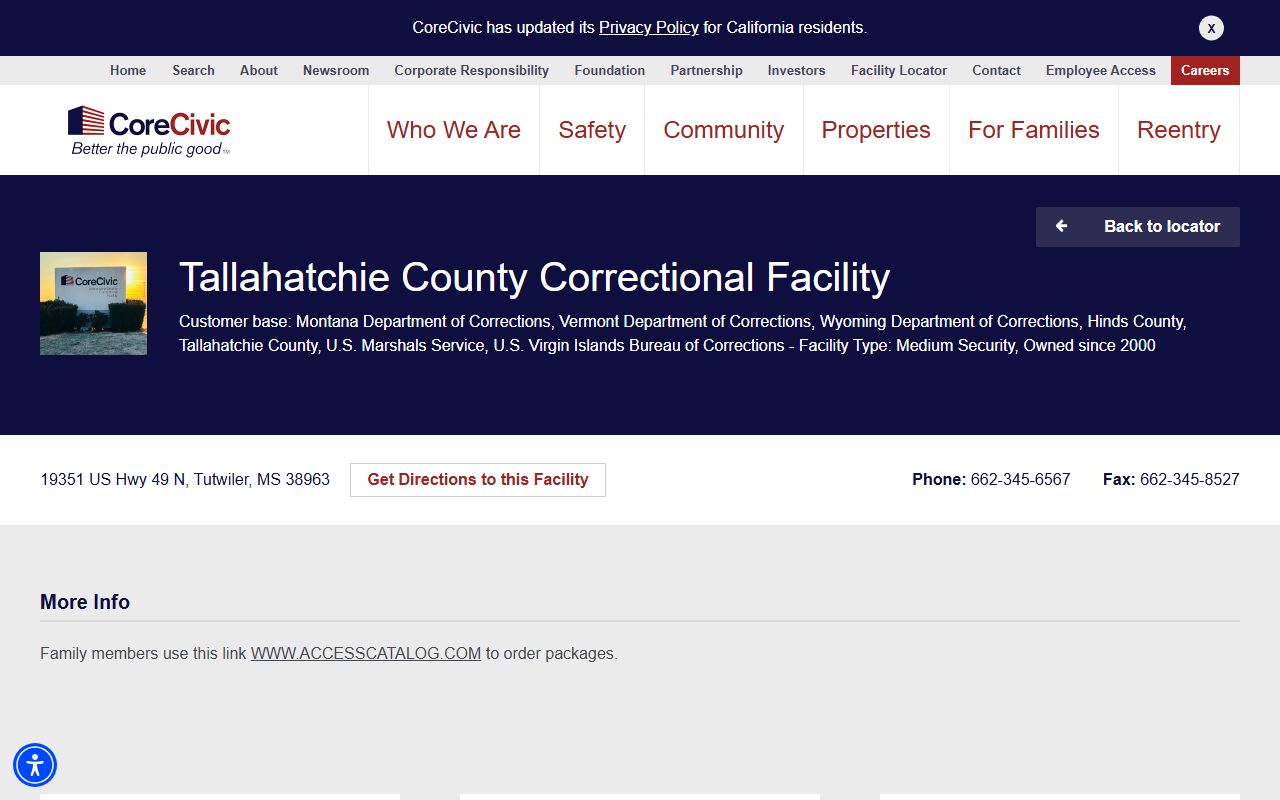
That facility may hold out-of-state, federal, or contract inmates, so identify the custody authority first. The full roster path, the MDOC link, and the booking questions live on the Tallahatchie County inmate records page, and active warrants are covered on the warrant records page.
Marriage, Divorce, and Probate Records
Marriage licenses are a Circuit Clerk function in Mississippi, so a Tallahatchie marriage license starts with Circuit Clerk Daphane Neal in Charleston or Sumner. Mississippi Code Section 93-1-5 sets the age and consent conditions a circuit clerk must confirm before issuing a license. Divorce and probate, by contrast, are Chancery Court matters, handled by the Chancery Clerk.
Divorce decrees come from the Chancery Clerk where the case was filed. The state health department does not keep decrees, but its divorce records page offers a paid index search that names the county, book, and page when the filing county is unknown. The certified decree still comes from the county. Estate and guardianship files are covered in detail on the marriage and divorce records and Chancery Court records pages.
Fees for Tallahatchie County Records
Many county-level copy and search fees are not published in official Tallahatchie sources, so the safest step is to confirm current amounts with the clerk before paying. A few state-level fees are fixed and useful to know in advance. The table lists only the amounts confirmed in official sources.
| Item | Amount |
|---|---|
| MSDH divorce index search, five years | $17 |
| DPS certified driving record, online | $14.31 |
| DPS certified driving record, mail or in person | $11.00 |
| Marriage license | Confirm with Circuit Clerk |
| Certified court copy | Confirm with clerk |
The certified driving-record fees come from the Mississippi DPS Motor Vehicle Record page. A driver record is a separate file from a court traffic record, and the two are requested from different offices.
Common Terms in Tallahatchie County Court Records
Court files use words that carry a precise meaning. A few terms show up across Circuit and Chancery dockets in Tallahatchie County. Knowing them makes a search result easier to read.
- Petitioner
- The person asking Chancery Court for relief, such as divorce, custody, probate, or guardianship.
- Indictment
- The grand jury charging document used to begin a felony prosecution in Circuit Court.
- Capias
- A court order directing an arrest, often after a failure to appear or a missed obligation.
- Nolle prosequi
- A prosecutor's decision not to proceed with a charge.
- Guardian ad litem
- A person the court appoints to represent a child's best interest.
History of the Tallahatchie County Courthouses
Tallahatchie County has carried two county seats for generations. The Tallahatchie River divides the county, and the two judicial districts grew from that geography. Charleston anchors the First Judicial District and the Board of Supervisors, while Sumner anchors the Second Judicial District. Modern Mississippi Electronic Courts pages still list both Charleston and Sumner court locations, so the dual structure remains in active use.
The Sumner courthouse holds a place in national memory. The National Park Service page for the Tallahatchie County Courthouse and Emmett Till Interpretive Center identifies the Sumner courthouse as the site of the 1955 trial of the men accused in the lynching of Emmett Till.
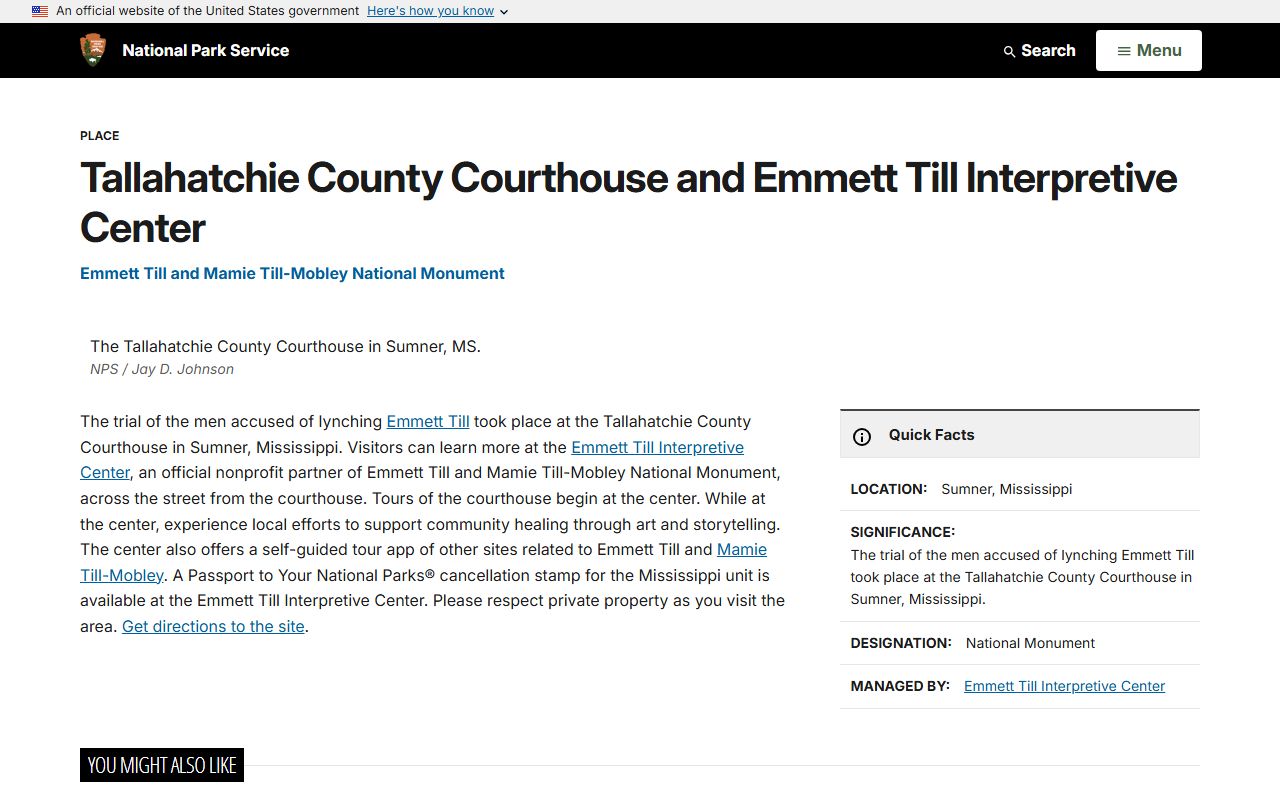
The Emmett Till Interpretive Center sits across the street, and courthouse tours begin there. The site is preserved with care as part of the county's civil-rights history. That history is tied to the building, not to modern case access, which still runs through the clerks and Mississippi Electronic Courts.
Tallahatchie County is rural, and that shapes how people reach records. The U.S. Census Bureau QuickFacts page carries the current official population and demographic figures for the county.
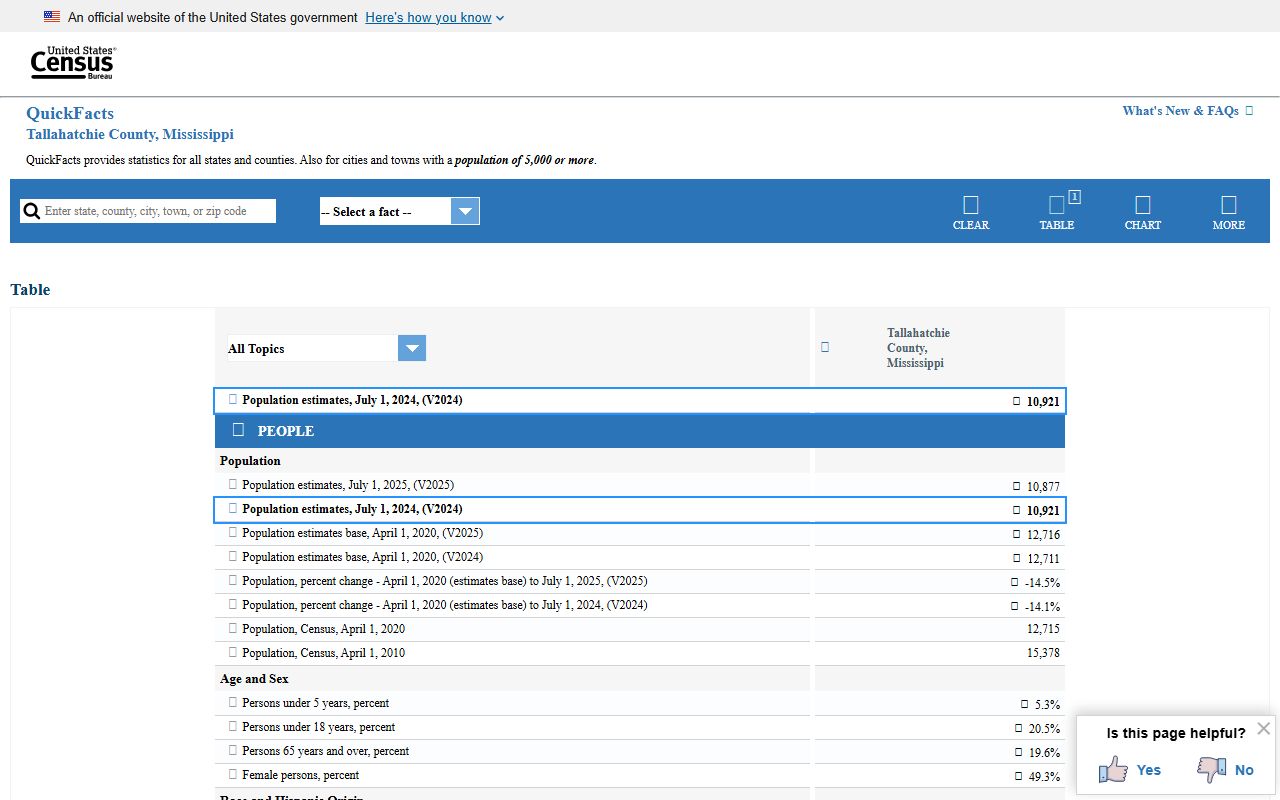
Those figures help explain why a single visit can mean a drive to either Charleston or Sumner. Confirming the district by phone before traveling is the practical habit in a county this size.
Frequently Asked Questions
Where do I search Tallahatchie County court records online?
Circuit and Chancery cases run through Mississippi Electronic Courts and its public access service, PAMEC. The free court-information pages for the Seventeenth Circuit and Seventh Chancery districts confirm the court name, the Charleston and Sumner locations, and the hours. Remote case detail requires a PAMEC account. Chancery hearing dates are also searchable through the Seventh Chancery master docket by date, chancellor, or keyword. Justice Court and Municipal Court files are not on those pages, so check the issuing court for tickets and city cases.
Does Tallahatchie County have a County Court?
No. County Courts exist only in counties where the legislature created one, and no Tallahatchie County County Court appears in the Mississippi Electronic Courts list. Cases route through Circuit Court for felonies and major civil suits, Chancery Court for family and probate matters, and Justice or Municipal courts for local cases. Avoid the term district court for the local trial court, since Mississippi does not use that label at the county level.
Which courthouse holds my case, Charleston or Sumner?
It depends on the judicial district where the case was filed. The First Judicial District is centered in Charleston, and the Second Judicial District is centered in Sumner. Both seats run Circuit and Chancery court functions. Because the county runs two courthouses, no single counter holds every file. The reliable step is to call the clerk and confirm the district before traveling, especially for older or paper records that are not visible online.
Is there an online jail roster for Tallahatchie County?
No official county online jail roster was located. For county custody, call the Tallahatchie County Sheriff's Office. For a person serving a state sentence, use the Mississippi Department of Corrections inmate and parolee search by name or MDOC ID number. The Tallahatchie County Correctional Facility in Tutwiler is a private prison, not the county jail, and it can hold contract inmates for other agencies. Identify the custody authority first, then contact that agency directly.
Where do I get a marriage license in Tallahatchie County?
Marriage licenses come from the Circuit Clerk in Charleston or Sumner. Mississippi Code Section 93-1-5 sets the age and consent conditions a circuit clerk must confirm before issuing a license. Both applicants should expect to appear together and to show proof of age and identity. The exact Tallahatchie license fee was not published in official sources, so confirm the current amount with the Circuit Clerk before applying.
How do I find a Tallahatchie County divorce record?
Divorce is a Chancery Court matter, so the decree comes from the Chancery Clerk in the district where the case was filed. The state health department does not keep decrees, but it offers a paid five-year index search that returns the county, book, and page when the filing county is unknown. After the index identifies the county, request the certified decree from that county's Chancery Clerk. Hearing dates can be checked through the Seventh Chancery master docket.
Are all Tallahatchie County court records public?
Most are public under the Mississippi Public Records Act, but not all. Juvenile records, sealed cases, expunged records, adoption files, and mental-health proceedings are restricted. Personal identifiers such as Social Security numbers and minor names are often redacted. Public access also does not mean every document is online or free. The clerk who holds the file is the certification source, so treat a remote view as informational until a certified copy is issued.